Evil Never Ends, Neither Here Nor in Hyrule
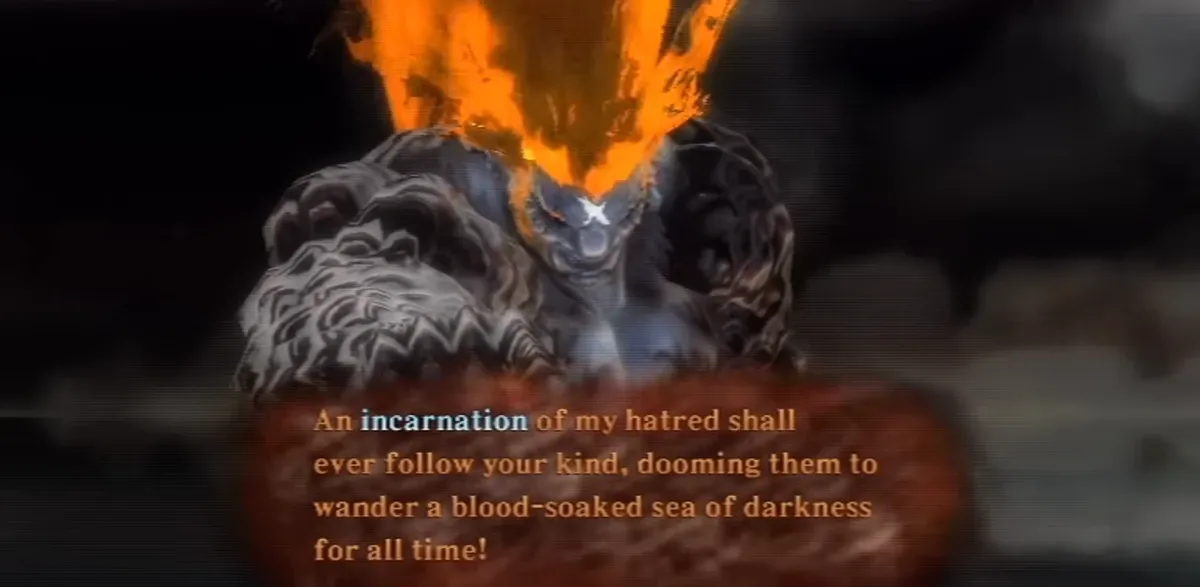
At the end of The Legend of Zelda: Skyward Sword, Demise leaves Link, Zelda and the rest of Hyrule with a curse. Hatred, he says, will persist, never disappear, and his malice will follow their descendants across every age in a never-ending struggle. For a long time, I have understood this scene the way most people do. As one of the newer games in this long-running series, and the first chronologically, it is taking on the enormous task of answering why most Zelda games keep telling variations of a very similar story. Someone at Nintendo wants people to know, once and for all, why Hyrule keeps getting taken over by evil again and again. Why one princess after another ends up burdened with a responsibility they are only half ready to carry. And why both those things warrant a call for another Link.
The timeline that this one line gives birth to, its contradictions, and the weird paths are interesting to me. They give Hyrule a lot of stuff to accumulate. A ruined temple becomes an actual place where people from a different era may once have prayed, instead of just a progression gate. Cities get buried on top of one another, and castles get rebuilt on the foundations of their predecessors. Entire civilisations and cultures vanish while new ones take their place. The hero who once saved the day becomes a myth, a folktale that grandmothers tell kids to help them sleep better. The previous evil becomes a myth and a folktale too - only grandmothers use it to scare kids into sleeping instead. All these things make Hyrule feel slightly like our own world, where one generation is always standing on corpses and said corpses’ unfinished work, unfinished because the evil will return sooner or later.
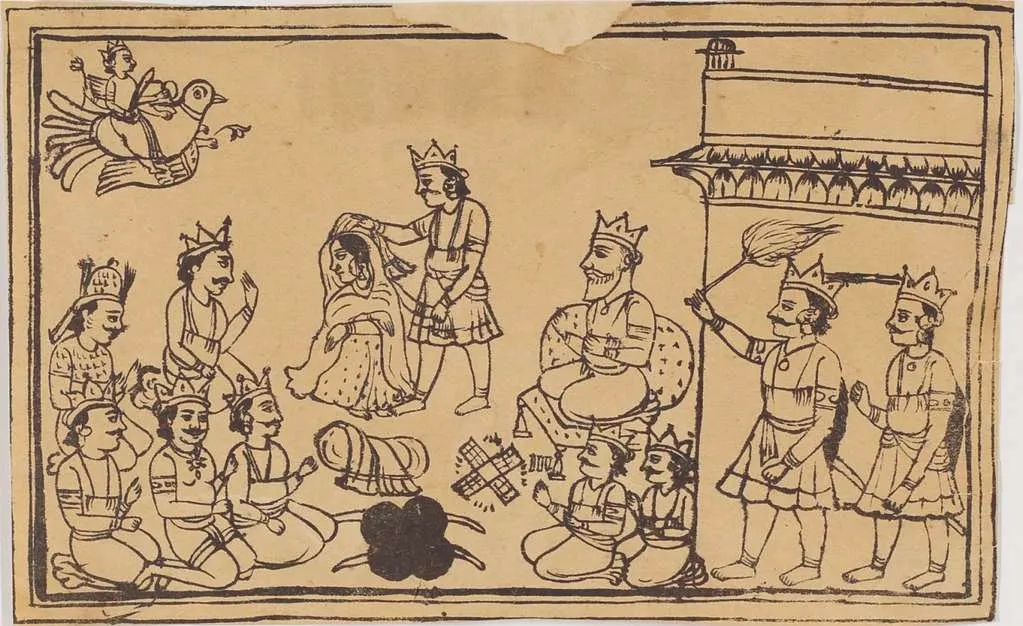
In India, ancient religious epics like the Mahabharata are a core part of many kids’ growing-up process here. You’d relive them in cartoons that aired at the exact time you’d come home from school, watch their live-action adaptation serials during dinner with the family, buy books or comics that made these stories a little more digestible for 10-year-olds, and on the weekends, listen to fragmented parts of the story as you fall asleep to your grandparents’ voice. As a child, I loved them for very obvious reasons. Who wouldn’t want to be like the heroic and born-talented archer Arjuna, the warrior who stood against his own corrupted family unflinchingly, or have a god-friend like Krishna, whose guidance brought forth the former’s courage to stand tall against his very own?
I loved reading it once every year, saw it as our country’s history, and looked up to its heroes, who operated on a scale no ordinary man could possibly touch. It was inspiring back then. But nowadays, I see this story as one that creates a kind of unquestioning belief. It can very easily lead people to think that, whenever darkness in this world becomes unbearable, someone truly extraordinary will always arrive to face it. Extraordinary people will always come to face extraordinary evil and win, no matter the cost. That doesn’t sit right with me.
Duryodhana, the story's great antagonist, dies at the end as all bad guys do, and the narrator ends the chapter by telling you that the cosmic righteousness of the world shall be restored soon enough. Not really, though. His evil deeds, or even evil in general, don’t just disappear with his demise. Ashwathama, his most loyal friend and soldier, commits the most heinous act in the war right afterwards and is condemned to wander the world till the end of time. Even then, the punishment couldn’t undo what he did or retire the impulse that caused it. Hell, forget about him for a sec. Most things that people think of as evil escaped the clutches of this story anyway. Cruelty survived. Greed survived. Ego, pride, and humiliation made it out too. The worst of them all, the willingness to look away from suffering, also lived on.
It’s a very difficult thing to contend with. When I think back on the story now, all I keep thinking about is Draupadi - the queen who was dragged into the king’s assembly hall, placed as a kind of bet by her own husbands, and humiliated in front of everyone as Dushasana, the aforementioned bad guy’s brother, attempted to tear away at her drapes. Krishna, the god and her brother of sorts, sitting miles away from the scene, cried and blessed Draupadi with a cloth that may never run out to protect her chastity. It was a tender miracle and a much-needed deus ex machina for one of the most harrowing parts of the tale. Unfortunately, no woman in our world can count on it. When you look around, you see an abundance of Draupadis, humiliated in public, exploited in private, and failed by the people meant to protect them. What’s missing in the story now is the other half: the Krishna who saves her in the moment, or the heroes who deliver eventual justice. Extraordinary evil is no longer being answered to by extraordinary individuals. Worse yet, extraordinary evil exists everywhere now.
I was watching a rerun of Mahabharata with my family while playing Ocarina of Time when the following thought struck me.
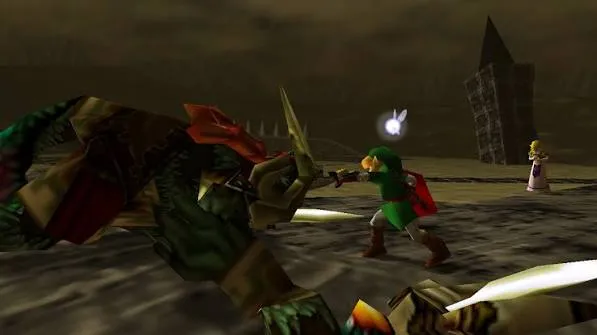
The heroes that save Hyrule are remembered as legends, yes, but something I really appreciate from Zelda is how none of them starts out that way. Nothing about them, at least at first, suggests that they are uniquely equipped to carry the weight that will eventually be placed on them. The Hero of Time was just an orphan adopted by the great Deku tree and raised among the immortal Kokiri, dragged into a war he couldn’t even begin to understand. The Hero of Winds was a simple islander who hated the hero’s tunic but set sail in search of his sister, not because he was chosen for anything. The Hero of Twilight was a ranch hand whose worst problem, until recently, was a missing goat. The Hero of the Wild was a failure who woke up to a ruined kingdom to take on the very incarnation of evil in the world. All of them became legends not because they were destined for their roles in history, but because of their choice to play said role. Each Link found himself in a world that was left exposed to evil in spite of his predecessor’s work. Each of them was given only one chapter of Hyrule’s history, and they chose to act in the only way they knew how.
I want to make a special mention of the Downfall timeline here, as it starts with someone ordinary answering the call and actually failing. Link loses, Ganon wins, and the world is thrown into complete darkness and chaos. Some people seem to really dislike the very idea, but I think if none of the Links could ever fail, their courage would lose its meaning. Victory would become inevitability in a costume, which I don’t want. The ancient epic already gave me that. Courage can mean something only if failure is genuinely a possibility. What this timeline shows, more than any other branch, is that time will not stop if one generation comes up short. A kingdom will suffer because of failure, but it will continue to survive until some other generation in the future builds the courage to try again.
For some time now, and due to my admittedly cynical readings of the Mahabharata, a small part of me felt that the point of Hyrule’s timeline was to prove that Ganon or evil in this world can never truly be defeated. It was a way to give these games some darkness and make them more unpleasantly cyclical. We’re reaching a trite conclusion here, but I suppose this history exists to show that no matter what gets lost to the evil of one age, the willingness to answer it will survive. And that willingness won’t come from extraordinary people - it will come from ordinary people, willing to take a courageous stand against the wrongdoings of the world.
Most of us will never be as talented as Arjuna or have a god on our side like Krishna. Hell, many of us will not have a legendary sword, a magical companion, a strong crew, or a bunch of mythical tools like Link either. Most of us will have a much smaller role in the grand scheme of things, to take care of something far less dramatic than the cosmic order of the world or a giant evil boar-monster. An amoral institution, a prejudice, a conflict that started before we were born. We too will wake up somewhere in the middle of humanity’s history and be asked to do something with the chapters handed to us. Not to finish it really, but to simply not abandon it and keep trying. We just need to carry our shared burdens a little further, hand it to someone we’ll probably never meet, and trust that they'll do the same.
All that is to say, yeah, I think Demise was right: evil does not end and will return in every lifetime. But he was only half right, being too consumed by his own hatred to notice that the courage to answer it will also come back. Every single time.

...
Thank you for reading. I tried to make the Mahabharata section as digestible as possible for anyone who might not be familiar with the epic, though as I wrote it, I became increasingly aware of how cynically I’ve come to read it. I think that’s something I’d like to change, because if anything, Zelda and this piece have made me realise that I might have been looking at the story through a particularly narrow lens. I suppose that’s one of the nicer things about writing about something: the thing you’re writing about might end up teaching you something you didn’t expect. Another trite learning for me, hell yeah.